



Share House vs. Room Sharing in Japan|Costs, Pros & Cons Explained
Hi everyone! I’m Shuhei from the TESEN team.
“What’s the difference between a share house and room sharing?”
Both involve sharing a home with other people, but there are important differences in rental contracts, costs, and everyday lifestyles.
These days, people choose share houses not only to save on rent and living expenses, but also to make new friends and enjoy international exchange.
In this article, I’ll explain the differences, advantages and disadvantages, costs, and move-in process from our perspective as a share house operator. Let’s get started!
Contents
- What’s the Difference Between a Share House and Room Sharing?
- What Is Room Sharing?
- What Is a Share House?
- A Comparison in Five Key Areas
- Comparing the Costs Over One Year
- How Does the Move-In Process Differ?
- Which Option Is Right for You?
- Frequently Asked Questions
- Conclusion: Choose the Lifestyle That Suits You
What’s the Difference Between a Share House and Room Sharing?
First, let’s take a look at the main differences.
| Category | Share House | Room Sharing |
|---|---|---|
| Who you live with | Often people you haven’t met before | Usually friends or acquaintances |
| Rental contract | Usually individual contracts | Depends on the property:one or multiple tenants may sign |
| Furniture & appliances | Often provided | Often purchased by residents |
| Utilities | Often included in a common service fee | Usually split among residents |
| Cleaning shared areas | Many properties offer cleaning services | Usually shared among residents |
| Social life | Opportunities to meet different people | Live with people you already know |
| Handling problems | Often possible to consult the management company | Usually resolved among residents |
What Is Room Sharing?
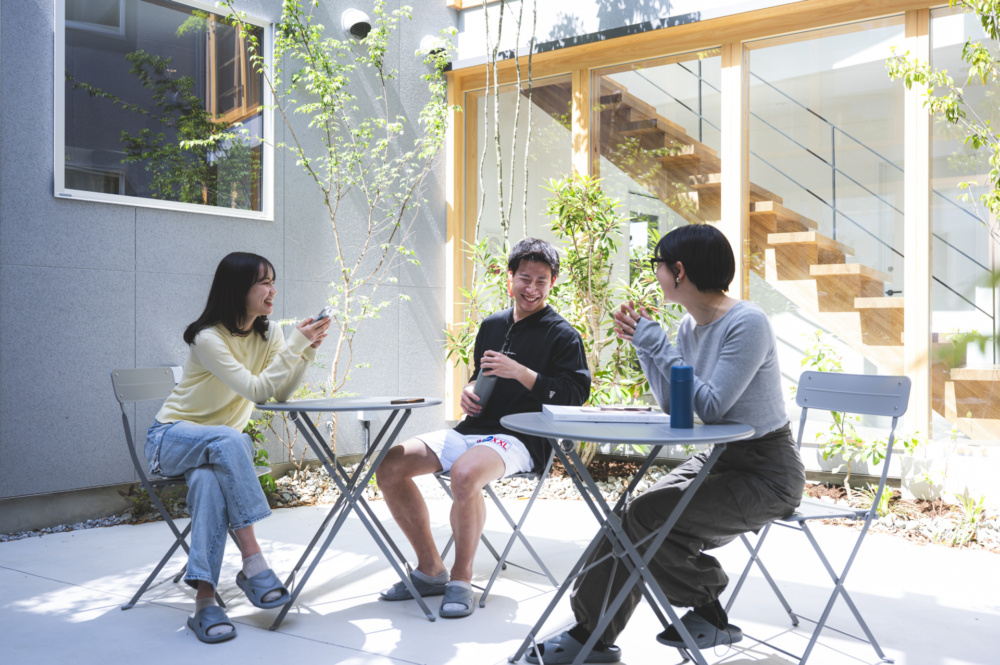
Room sharing means renting one home together with friends, acquaintances, or other people and sharing daily life.
For example, two close friends might rent a two-bedroom apartment, each have their own bedroom, and share the kitchen, living room, and bathroom.
Because you can split the rent and utility bills, you may be able to afford a larger home or a more convenient location than you could on your own.
However, you’ll need to discuss and decide how to buy furniture and appliances, divide cleaning duties, and manage shared expenses.
Advantages of Room Sharing
- You can split rent and utility costs.
- You can live with friends or people you already know.
- You can choose the location and property together.
- You can furnish and decorate the home to your own taste.
Disadvantages of Room Sharing
- You may need to pay upfront for furniture and appliances.
- You may disagree about cleaning or how to divide expenses.
- If one person moves out, the remaining residents may have to pay more rent.
- Different routines can cause stress, even between friends.
- You may need to arrange and pay for utilities, Wi-Fi, and fire insurance yourselves.
What Is a Share House?
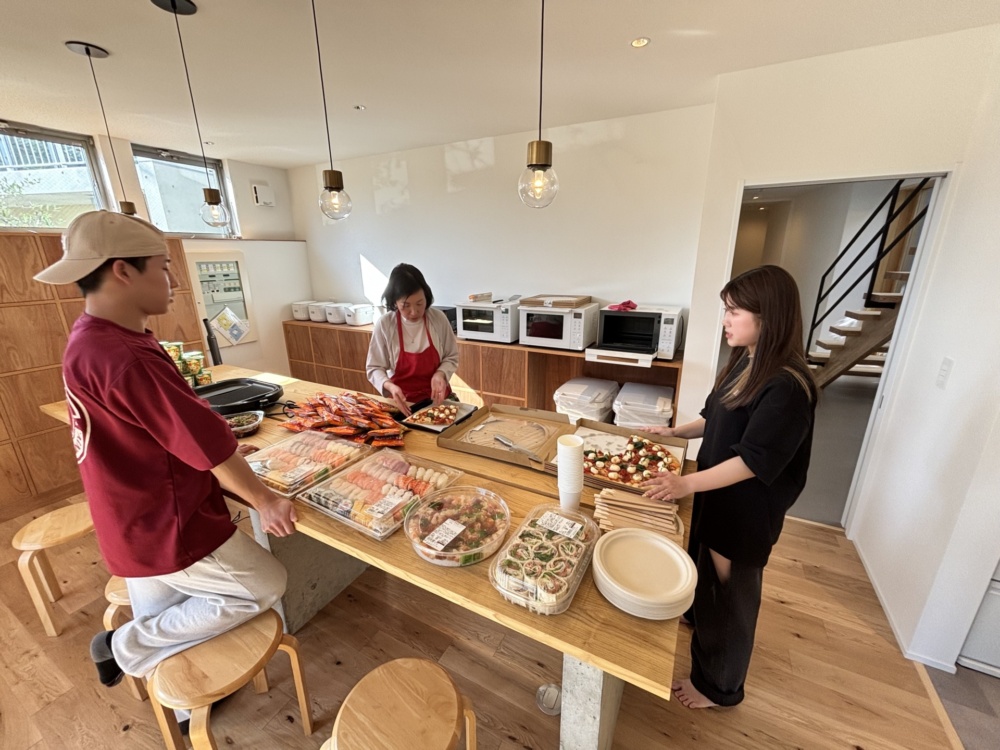
A share house is a home where residents have private spaces, such as bedrooms, while sharing facilities like the kitchen, living room, and showers.
Many share houses are managed by an operating company and come with furniture, appliances, Wi-Fi, and other essentials already provided.
Unlike room sharing with friends, it’s common to start living with people you’ve never met before.
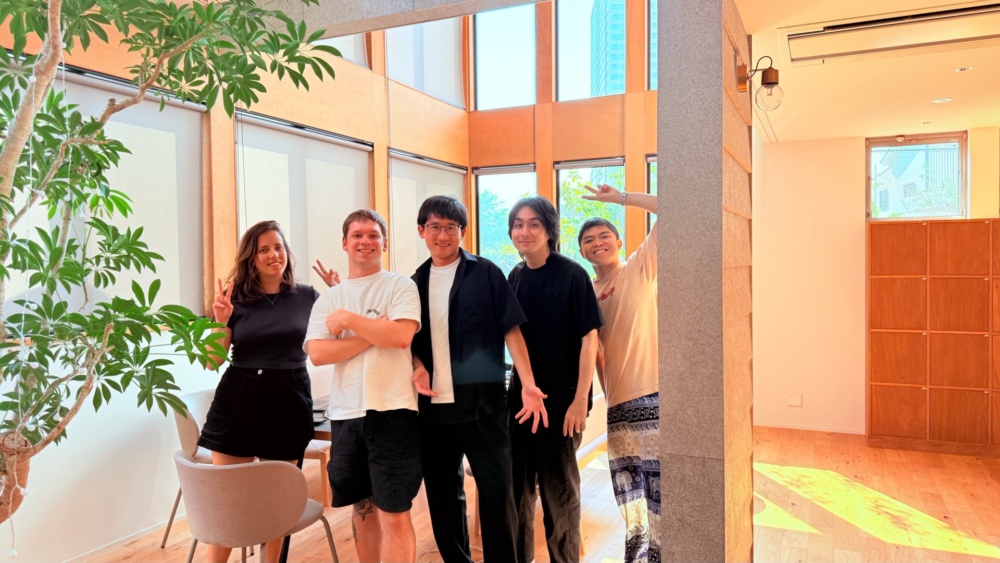
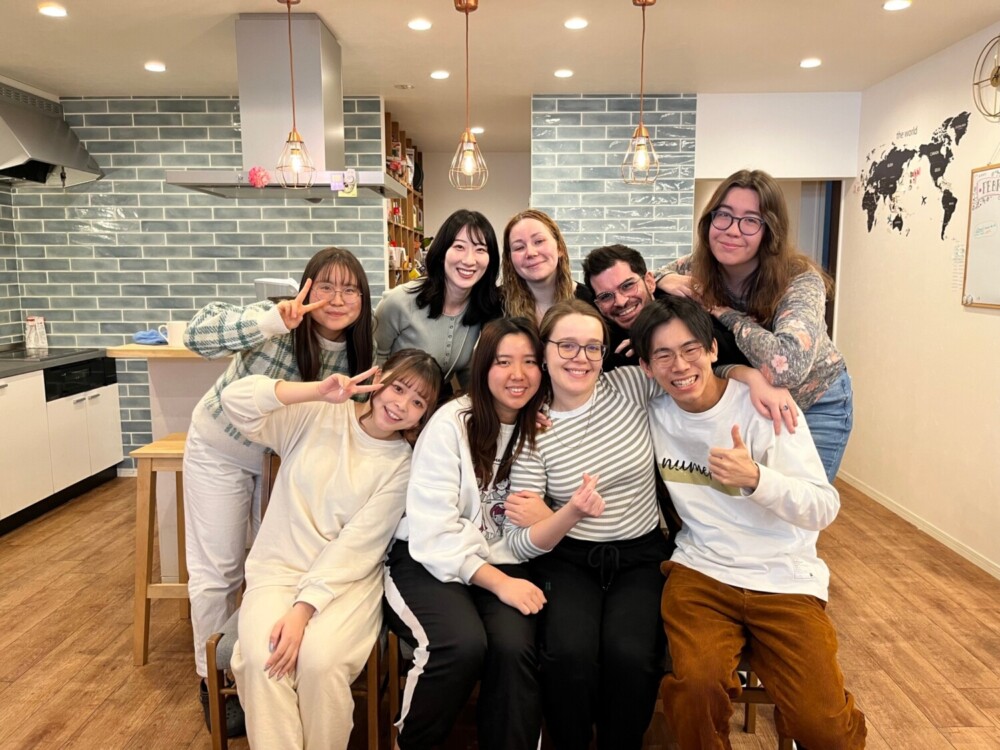
At TESEN share houses, residents come from a wide range of backgrounds, including Japanese residents, international students, working holiday participants, and people from overseas working in Japan.
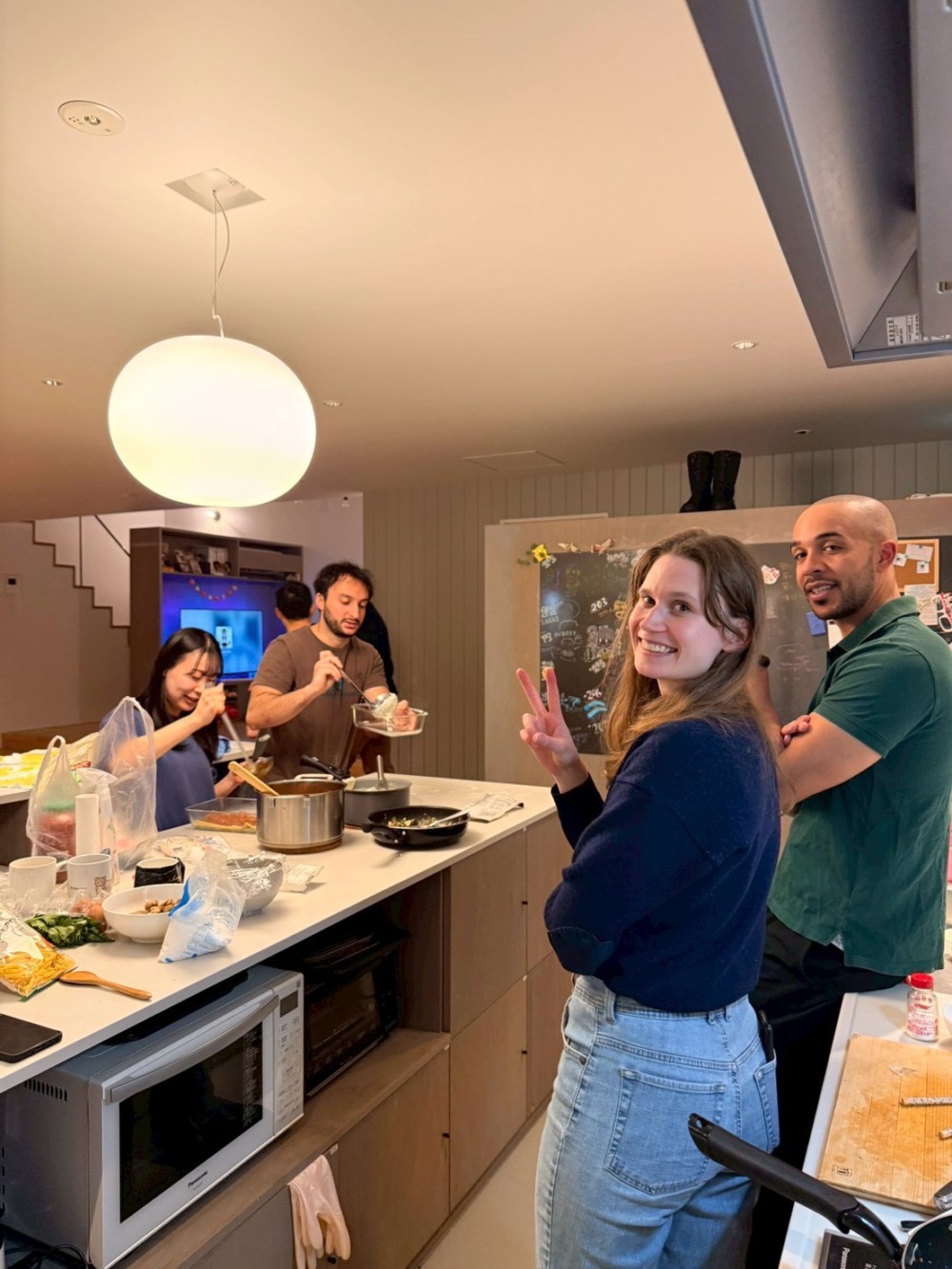
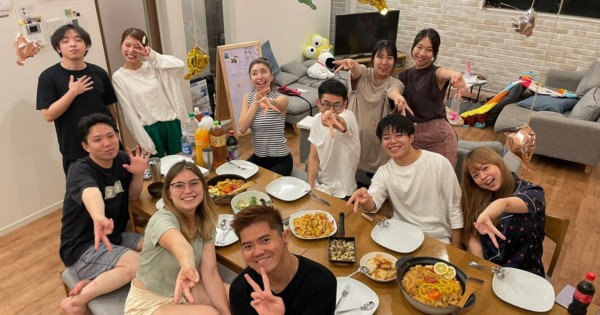
Cooking together, going on weekend trips, or simply chatting at home: everyday moments can lead to new friendships and connections.
Advantages of a Share House
- Many properties are furnished, making moving easier.
- You can meet people from different countries.
- You can enjoy social experiences you might not get living alone.
- Some properties provide cleaning services for shared areas.
- You can often contact the management company if you need help.
- The management company usually arranges utilities and Wi-Fi.
Disadvantages of a Share House
- You need to share kitchens, showers, and other facilities.
- Noise and different daily routines may sometimes bother you.
- You need to follow house rules, especially for shared spaces.
- You cannot always choose who you live with.
- Some properties have age restrictions for new residents.

Share House vs. Room Sharing: Five Key Differences
1. Upfront Costs
When planning a move, one of the first things to consider is the upfront cost.
With room sharing, renting a regular apartment may involve a security deposit, key money, agency fees, and the cost of buying furniture and appliances.
On the other hand, share houses often come furnished, which can reduce the amount you need to spend when moving in.
However, share houses may also require deposits and administrative fees, so always check the total upfront cost before signing a contract.
2. Monthly Living Expenses
In room sharing, residents generally split rent, utilities, internet bills, and other living expenses.
In a share house, there is often a monthly common service fee in addition to rent. This fee may include utilities and Wi-Fi.
For example, at TESEN SHARE HOUSE, the common service fee covers utilities, Wi-Fi, and cleaning of shared spaces.
When comparing monthly expenses, look at the total cost, not just the rent.
3. Privacy
Privacy is important, whichever lifestyle you choose.
With room sharing, choosing an apartment with separate bedrooms gives each resident their own space. However, sharing a studio apartment can make private time more difficult.
In a share house, choosing a private room also gives you somewhere to relax on your own.
Want to socialize? Head to the living room. Need some quiet time? Relax in your room.
Being able to choose how you spend your time is one of the great things about a share house with private bedrooms.
4. Relationships and Social Life
Room sharing often means living with close friends or acquaintances, so you already have some idea of their personalities before moving in.
In a share house, however, you have opportunities to meet people you might never have crossed paths with otherwise.
People of different ages, nationalities, and professions might cook in the same kitchen or chat together in the living room.
Of course, differences in habits and values can sometimes be challenging.
But learning about those differences can also broaden your perspective.
5. Management and Handling Problems
When people live together, disagreements about cleaning, noise, and shared facilities can happen.
In room sharing, residents usually need to discuss problems and find solutions themselves.
In a professionally managed share house, residents may be able to contact staff for help with everyday issues.
At TESEN, our staff support residents with maintenance issues, shared facilities, and other concerns to help everyone feel comfortable at home.

How Much Does It Cost to Live for One Year?
So, which is more affordable over a year: a share house or room sharing?
The answer depends on the rent, number of residents, and contract conditions.
For example, even if you split rent with a roommate, you may still need to pay separately for furniture, appliances, utilities, insurance, and internet access.
In a share house, you may pay a monthly common service fee, but furniture, appliances, and Wi-Fi are often already provided.
When comparing costs, try using this formula:
Total Annual Cost = Upfront Costs + (Monthly Rent, Service Fees, Utilities, etc. × 12) + Other Expenses
It’s also important to check any move-out fees and refundable deposits.
Especially if you’re planning to stay for six months to a year, consider moving costs and the move-out process as well.

How Does the Move-In Process Differ?
For Room Sharing
- Find someone to live with.
- Look for a rental property that allows room sharing.
- Visit the property.
- Agree on the rental contract and how to split expenses.
- Complete the screening and rental agreement.
- Prepare furniture and appliances, then move in.
Not all rental properties allow room sharing, even if they are ordinary apartments.
Always check with the landlord or agent before applying.
For a Share House
- Find a property in your preferred area that meets your needs.
- Visit in person or take an online tour.
- Check the move-in requirements and house rules.
- Complete the screening and contract.
- Pay the initial fees and move in.
Because many share houses come furnished, you can often start your new life without bringing lots of belongings.
Share House or Room Sharing: Which Is Better for You?
Room Sharing May Be Right for You If…
- You want to live with close friends or people you already know.
- You want to choose the location and interior design together.
- You prefer to decide your own rules for cleaning and sharing expenses.
- You want a quieter home with fewer people.
A Share House May Be Right for You If…
- You want to make new friends and connections.
- You enjoy discovering different cultures and perspectives.
- You want to avoid buying lots of furniture and appliances.
- You want the kind of social experiences that living alone may not offer.
- You have just arrived in Japan and want to meet people.
- You want opportunities to learn or practice languages such as English.
In particular, a multicultural share house is a great option if you’re interested in international exchange.
You may find yourself speaking English while living in Japan or learning about customs from other countries. Everyday life can become a small cultural exchange.

Frequently Asked Questions About Share Houses and Room Sharing
Q. Can I move into a share house by myself?
Yes! Most people move into a share house on their own. You don’t need to know anyone there beforehand. Requirements vary by property, so check before applying.
Q. Do share houses have private rooms?
Yes. Many share houses offer private bedrooms. Some also have dormitory-style rooms shared by multiple people, so choose the setup that suits you. At TESEN, all private rooms have locks.
Q. Which is cheaper: a share house or room sharing?
It depends on the location, rent, number of residents, and contract terms. Compare the total costs, including upfront fees, service charges, utilities, and furniture or appliance purchases, not just rent.
Q. What should I do if I have a problem with another resident?
First, check the house rules and available contact points. In a managed share house, you may be able to ask the staff for help. It’s a good idea to check the management arrangements before moving in.
Q. Can international residents live in share houses in Japan?
Many share houses in Japan welcome residents from overseas. At TESEN SHARE HOUSE, our community includes international students, working holiday participants, and people from overseas working in Japan. Requirements and documents vary by property.
More Frequently Asked Questions (FAQ)
Have questions about share house life or moving in? Visit our FAQ page for answers to common questions about living at TESEN.
Conclusion: Choose the Lifestyle That Suits You!
We’ve looked at the differences between share houses and room sharing.
Both involve sharing living spaces and expenses, but they differ in contracts, management, and how you connect with the people around you.
If you want to create a home together with close friends, room sharing could be a great fit.
If you want to meet new people and experience different perspectives, a share house might be the better choice.
There’s no single right answer. What matters most is the kind of everyday life you want to enjoy.
At TESEN SHARE HOUSE, people from many different countries and backgrounds live together in and around Osaka.
If share house living sounds interesting, we’d love to welcome you for a tour!
Seeing the building and experiencing the atmosphere of the living room in person might reveal something you can’t quite capture in photos.
Related Article: Living with People from Other Countries in Osaka

 SHARE
 ReTWEET






Leave a Reply